

The Guide You Need
You have mesothelioma. You have filed a VA claim. Or you are trying to file. But the forms are confusing. The deadlines are stressful. The VA keeps asking for more evidence. You are sick. You are tired. You do not have the energy for this.
You need help.
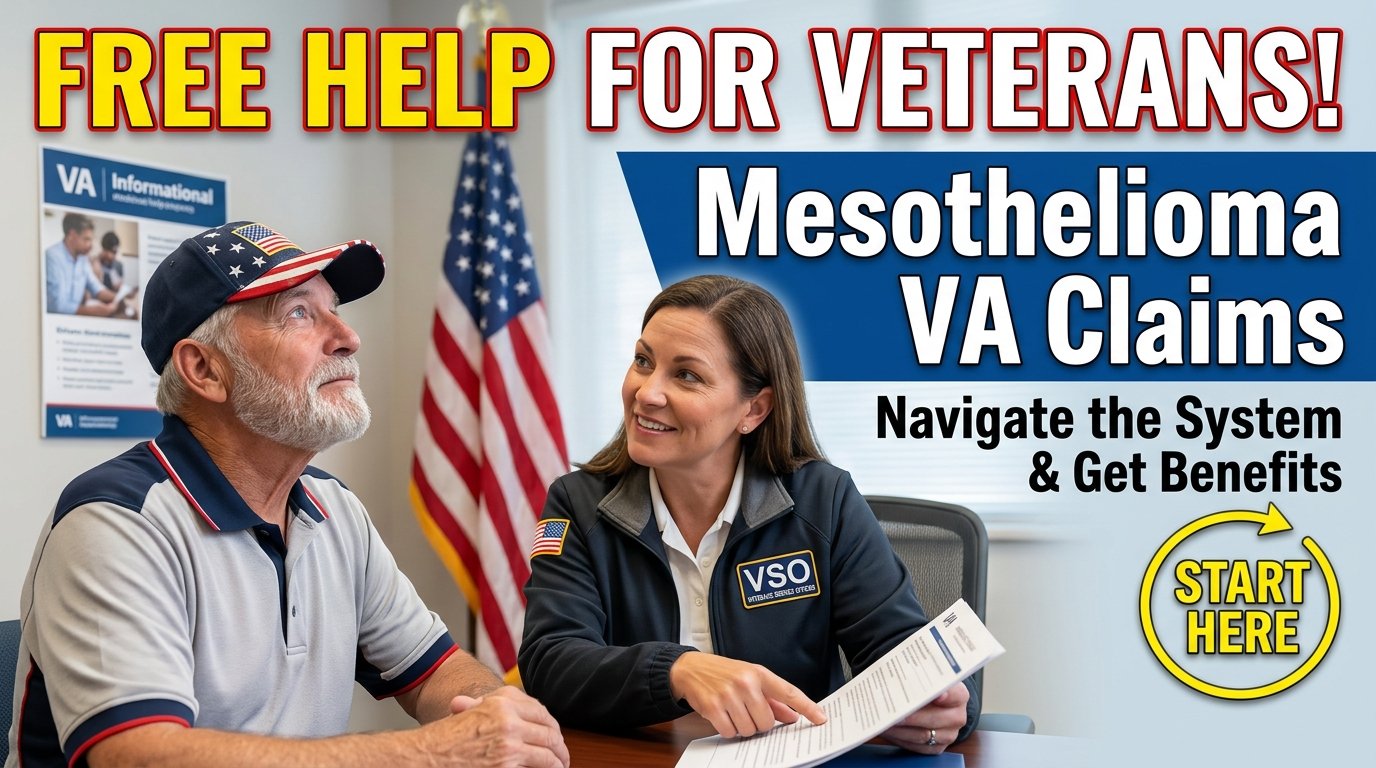
Here is what you need to know. There are people whose job is to help veterans like you. They are called Veterans Service Officers (VSOs) . They are trained, accredited professionals who help veterans file VA claims for free. They know the forms. They know the deadlines. They know what evidence the VA needs. And they will fight for you.
For veterans with mesothelioma, a VSO can be the difference between a denied claim and an approved claim. Between waiting years and getting benefits in months. Between giving up and getting what you deserve.
This guide will walk you through everything you need to know about VSOs for mesothelioma claims. You will learn what a VSO does, how to find one, what questions to ask, and how to work with them effectively.
No complicated government language. No confusion. Just clear, honest information to help you get the help you need.
Part 1: What Is a Veterans Service Officer (VSO)?
The Simple Explanation
A Veterans Service Officer (VSO) is a trained, accredited professional who helps veterans and their families file VA claims. VSOs work for:
- Veterans service organizations (American Legion, VFW, DAV, AmVets, etc.)
- State or county veterans affairs departments
- Tribal governments
VSOs are accredited by the VA. This means they have passed a test and completed training. They know the VA system inside and out.
What VSOs Do
- Help you understand your VA benefits
- Gather your evidence (service records, medical records)
- Complete and file VA forms
- Submit your claim electronically
- Track the status of your claim
- Respond to VA requests for more information
- Help you appeal denied claims
- Represent you before the VA
What VSOs Do NOT Do
- Provide legal advice (unless they are also attorneys)
- Handle lawsuits against asbestos companies (you need a separate attorney for that)
- Guarantee your claim will be approved (no one can)
- Charge you for their services (VSOs are free)
Part 2: Why You Need a VSO for a Mesothelioma Claim
The VA System Is Complicated
The VA claims process is notoriously complex. There are dozens of forms. There are strict deadlines. There are specific rules for what evidence is accepted. A small mistake can delay your claim by months or years.
Mesothelioma Claims Have Special Considerations
Mesothelioma claims have unique challenges that a VSO understands:
- Long latency period: Exposure happened decades ago. Evidence can be hard to find.
- Secondary exposure: Many family members were exposed through a veteran’s work clothes. Proving secondary exposure requires specific evidence.
- PACT Act presumptions: The PACT Act made mesothelioma presumptive for many veterans, but you need to cite it correctly.
- Expedited processing: Veterans with terminal illnesses can request faster processing. A VSO knows how.
VSOs Are Free
Unlike lawyers (who charge a percentage of your back pay), VSOs are completely free. They are paid by their parent organization (American Legion, VFW, state government, etc.). You pay nothing.
VSOs Have Relationships with the VA
Experienced VSOs work with the VA every day. They know the VA staff at your regional office. They know who to call when a claim is stuck. They know how to escalate issues.
Part 3: Types of VSOs
Service Organization VSOs
These VSOs work for national veterans service organizations.
| Organization | Focus | Contact |
|---|---|---|
| DAV (Disabled American Veterans) | All veterans, especially disabled | dav.org |
| American Legion | All veterans | legion.org |
| VFW (Veterans of Foreign Wars) | Combat veterans | vfw.org |
| AmVets | All veterans | amvets.org |
| Paralyzed Veterans of America | Veterans with spinal cord injuries | pva.org |
State and County VSOs
Many states and counties employ their own VSOs. These VSOs are often located at:
- State veterans affairs departments
- County veterans service offices
- Local VA clinics or hospitals
Advantage: They are local. You can meet them in person.
Disadvantage: They may have less experience with complex mesothelioma claims.
Tribal VSOs
Native American veterans can work with VSOs from tribal governments.
Part 4: How to Find a VSO
Method 1: Use the VA’s VSO Locator
The VA has an online tool to find accredited VSOs near you.
Steps:
- Go to www.va.gov/ogc/apps/accreditation/
- Enter your zip code
- Review the list of accredited VSOs in your area
- Contact the organization to make an appointment
Method 2: Contact a National Organization Directly
Call the national organization’s helpline. They will connect you with a local VSO.
- DAV: 1-877-426-2838
- American Legion: 1-800-433-3318
- VFW: 1-833-839-4389
Method 3: Visit Your Local VA Medical Center
Most VA medical centers have a VSO office. Ask at the information desk.
Method 4: Contact Your State Veterans Affairs Department
Search online for “[your state] veterans affairs department” and ask for VSO assistance.
Part 5: What to Look for in a VSO for a Mesothelioma Claim
Not all VSOs are the same. Some have more experience with mesothelioma and asbestos claims than others.
Questions to Ask Before Choosing a VSO
Experience:
- How many mesothelioma claims have you handled?
- How many asbestos-related claims have you handled?
- How long have you been a VSO?
PACT Act knowledge:
- Are you familiar with the PACT Act presumptive conditions?
- Do you know how to cite the PACT Act on a mesothelioma claim?
Secondary exposure experience:
- Have you handled secondary exposure claims for family members?
- Do you know what evidence is needed?
Appeals experience:
- Have you handled appeals for denied mesothelioma claims?
- What is your success rate on appeals?
Availability:
- How quickly can you get my claim filed?
- Will you be my primary contact, or will I be passed to different people?
- How do I reach you (phone, email, in person)?
Red Flags to Watch For
- Guarantees approval: No one can guarantee a claim will be approved.
- Asks for money: VSOs are free. If someone asks for money, they are not a legitimate VSO.
- Pressures you to use a specific law firm: Some VSOs have relationships with law firms. That is fine, but you should not feel pressured.
- Does not return calls: If a VSO is too busy to respond, find another.
Part 6: What to Bring to Your VSO Appointment
When you meet with a VSO, come prepared. Bring as much of the following as possible.
Personal Information
- Your Social Security number
- Your VA claim number (if you have one)
- Your contact information
Service Records
- Your DD214 (military discharge papers)
- Any other service records (orders, evaluations, awards)
Medical Records
- Your mesothelioma diagnosis (biopsy report)
- Imaging results (CT, MRI, PET scans)
- Treatment records (surgery, chemotherapy, radiation, immunotherapy)
- Doctor’s notes and progress reports
Exposure Evidence (Direct Exposure)
- Ship names and dates of service
- Duty stations and job descriptions
- Any records showing asbestos exposure
Exposure Evidence (Secondary Exposure)
- The veteran’s DD214
- Your relationship to the veteran (marriage certificate, birth certificate)
- Evidence that you lived with the veteran
- Witness statements from family members
Other Documents
- VA rating decision letters (if you have filed before)
- Denial letters (if you are appealing)
Do not worry if you do not have all of this. A good VSO will help you find what you need.
Part 7: How a VSO Helps with a Mesothelioma Claim
Here is what you can expect when you work with a VSO on a mesothelioma claim.
Step One: Intake and Assessment
The VSO will review your situation. They will ask about:
- Your military service
- Your asbestos exposure
- Your mesothelioma diagnosis
- Any previous VA claims
They will tell you if you have a valid claim and what benefits you may be eligible for.
Step Two: Evidence Gathering
The VSO will help you gather:
- Your service records (requesting from National Archives if needed)
- Your medical records (requesting from your doctors)
- Exposure evidence (ship records, witness statements)
- Nexus letters (doctor’s opinions linking your mesothelioma to service)
Step Three: Completing the Forms
The VSO will complete VA Form 21-526EZ (or the appropriate form for your claim). They will make sure:
- All sections are filled out correctly
- The PACT Act is cited if applicable
- Secondary exposure is properly documented
- No mistakes that could delay your claim
Step Four: Submitting the Claim
The VSO will submit your claim electronically through the VA’s system. Electronic submission is faster than mail.
Step Five: Tracking and Follow-Up
The VSO will track your claim. They will respond to VA requests for more information. They will call the VA if your claim is delayed.
Step Six: Assisting with Appeals
If your claim is denied, the VSO will help you appeal. They will help you gather new evidence and file the appropriate appeal forms.
Part 8: VSOs vs. VA-Accredited Attorneys
For mesothelioma claims, you have two options: VSOs (free) or VA-accredited attorneys (fee-based). Here is how they compare.
| Feature | VSO | VA-Accredited Attorney |
|---|---|---|
| Cost | Free | Fee (usually 20-33% of back pay, capped by law) |
| Legal advice | No (cannot give legal advice) | Yes |
| Representation before VA | Yes | Yes |
| Representation in lawsuits | No | Yes (for asbestos lawsuits) |
| Experience with complex claims | Varies | Generally high |
| Best for | Straightforward claims, initial filings | Denied claims, complex appeals, legal issues |
When to Use a VSO
- Initial claim filing: A VSO can handle most initial mesothelioma claims.
- Straightforward exposure: If you served on a Navy ship or in a high-risk job, a VSO is usually enough.
- You cannot afford an attorney: VSOs are free.
When to Use an Attorney
- Your claim was denied: An attorney can help with complex appeals.
- Secondary exposure: Secondary exposure claims are more complex. An attorney may be helpful.
- You need legal advice: VSOs cannot give legal advice. Attorneys can.
- You also have an asbestos lawsuit: Many mesothelioma attorneys handle both VA claims and asbestos lawsuits.
Part 9: Can a VSO Help with Secondary Exposure Claims?
Yes. VSOs can help with secondary exposure claims. However, secondary exposure claims are more complex than direct exposure claims. Choose a VSO who has experience with secondary exposure.
What a VSO Can Do for Secondary Exposure Claims
- Help you gather evidence of the veteran’s exposure
- Help you document your relationship to the veteran
- Help you get a strong nexus letter from your doctor
- File the claim correctly
When You Might Need an Attorney for Secondary Exposure
- The VA denies your claim
- The veteran’s service records are missing
- You need to argue a complex legal point
Frequently Asked Questions
How much does a VSO cost?
Nothing. VSOs are free. They are paid by their parent organization (American Legion, VFW, state government, etc.).
Can a VSO guarantee my claim will be approved?
No. No one can guarantee VA claim approval. A good VSO can give you a realistic idea of your chances.
How long does it take to work with a VSO to file a claim?
The initial appointment takes 1-2 hours. Filing the claim takes 1-2 weeks, depending on how quickly you can gather your evidence.
Can I switch VSOs if I am not happy?
Yes. You can change VSOs at any time. Just inform your new VSO that you are switching.
Can I have both a VSO and an attorney?
No. You can only have one accredited representative at a time. Choose whichever is right for your situation.
What if there are no VSOs near me?
Many VSOs work remotely. You can work with a VSO by phone and email. Contact a national organization (DAV, American Legion, VFW) for help.
Resources
- VA VSO Locator: www.va.gov/ogc/apps/accreditation/
- DAV (Disabled American Veterans): www.dav.org | 1-877-426-2838
- American Legion: www.legion.org | 1-800-433-3318
- VFW (Veterans of Foreign Wars): www.vfw.org | 1-833-839-4389
- AmVets: www.amvets.org | 1-877-726-8387
- National Archives (for service records): www.archives.gov/veterans
Final Thoughts: You Do Not Have to Do This Alone
You have mesothelioma. You are tired. You are in pain. You are worried about your family. The last thing you need is to fight the VA bureaucracy by yourself.
You do not have to.
A Veterans Service Officer can help. They are trained. They are accredited. They are free. They know the forms. They know the deadlines. They know what evidence the VA needs.
Do not let pride or confusion stop you from getting help. Contact a VSO today. Get your claim filed. Get the benefits you deserve.
You served your country. Now let a VSO serve you.
Disclaimer: This article provides general information about Veterans Service Officers and VA claims for mesothelioma. It does not constitute legal advice or official VA guidance. VA benefits rules change. Every veteran’s situation is different. Always consult with a qualified Veterans Service Officer, VA-accredited attorney, or the VA directly about your specific situation. If you have been diagnosed with mesothelioma, speak with a doctor immediately and contact a VA-accredited VSO or attorney to understand your benefits.