

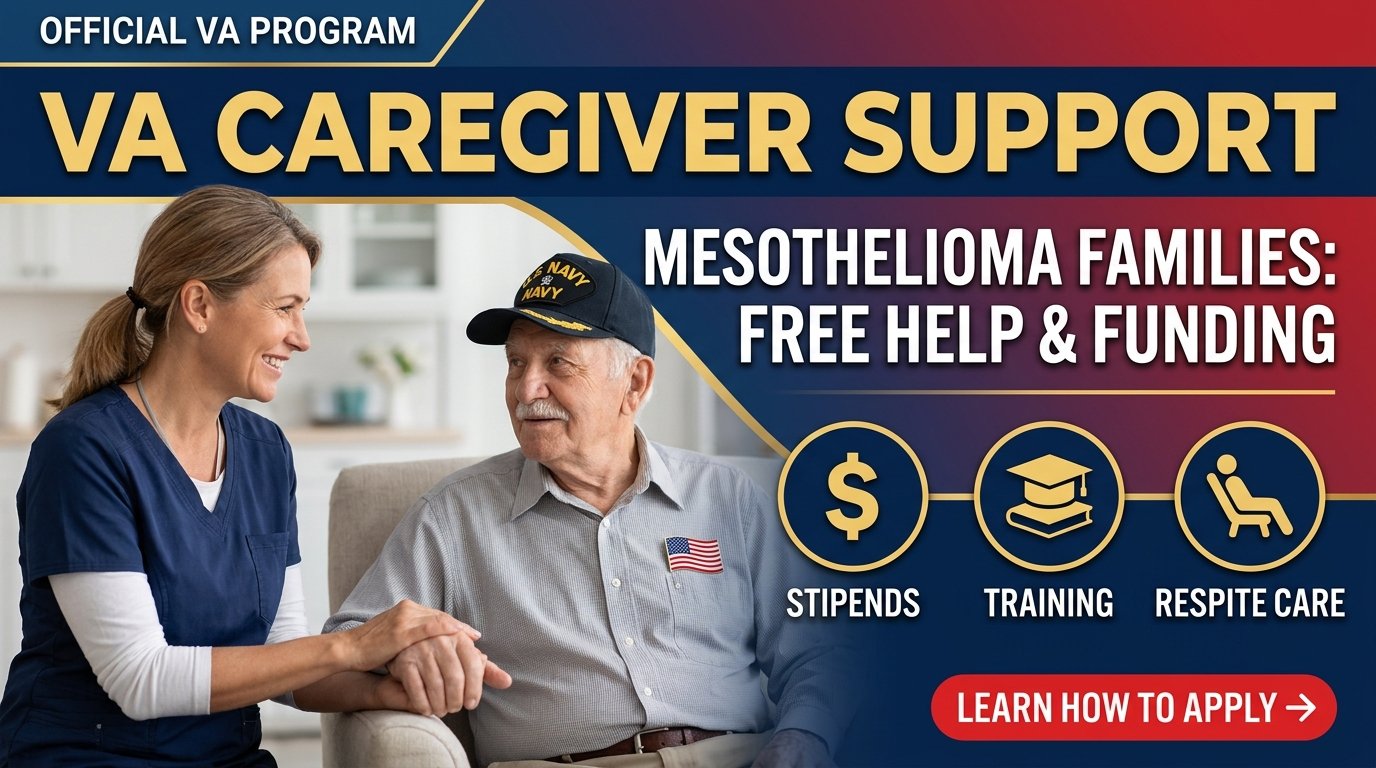
The Unsung Heroes
You did not sign up for this. You are a spouse, an adult child, a sibling, or a close friend. You love a veteran who has mesothelioma. And without anyone asking, without any training, without any pay, you became a caregiver.
You drive them to chemotherapy appointments. You cook their meals. You clean the house. You manage their medications. You help them bathe and dress. You hold their hand when they are scared. You cry in the car so they do not see you.
You are exhausted. You are stressed. You are worried about money. You feel guilty for being tired because they are the one who is sick.
Here is something you need to know. The VA has a program for people like you. It is called the Program of Comprehensive Assistance for Family Caregivers (PCAFC) . It provides a monthly stipend, training, mental health support, and respite care to family caregivers of seriously disabled veterans.
For veterans with mesothelioma (rated at 100 percent), you may qualify for this program. The stipend can be thousands of dollars per month. The training can help you provide better care. The respite care can give you a much-needed break.
This guide will walk you through everything you need to know about the VA Caregiver Support Program for families of veterans with mesothelioma. You will learn who qualifies, how much the stipend pays, what services are available, and how to apply.
No complicated government language. No confusion. Just clear, honest information to help you get the support you deserve.
Part 1: What Is the VA Caregiver Support Program?
The Simple Explanation
The Program of Comprehensive Assistance for Family Caregivers (PCAFC) is a VA program that provides financial and emotional support to family caregivers of seriously disabled veterans.
The program recognizes that family caregivers save the VA billions of dollars each year by providing care at home instead of in nursing homes or VA facilities. The stipend is a way of saying “thank you” and helping you make ends meet.
Two Tiers of Support
The VA offers two levels of caregiver support.
Tier 1: PCAFC (Comprehensive Assistance) – For caregivers of veterans who need help with daily living activities (bathing, dressing, eating, toileting, transferring). This tier includes a monthly stipend, training, mental health support, and respite care.
Tier 2: General Caregiver Support – For caregivers of veterans who do not meet the daily living needs threshold. This tier includes training, mental health support, and respite care, but NO monthly stipend.
For veterans with mesothelioma, most qualify for Tier 1 (PCAFC) because the disease eventually affects the ability to perform daily tasks.
Part 2: Do You Qualify for the Caregiver Stipend?
Basic Eligibility Requirements
To qualify for the PCAFC stipend, you and the veteran must meet all of the following requirements.
Veteran requirements:
- The veteran must have a serious service-connected disability (mesothelioma qualifies)
- The veteran must need help with at least one activity of daily living (bathing, dressing, eating, toileting, transferring)
- The veteran must be unable to live independently without caregiver support
Caregiver requirements:
- You must be a family member (spouse, adult child, parent, sibling, or extended family)
- You must live with the veteran (or provide care at the veteran’s home)
- You must complete caregiver training
- You must pass a background check
What Qualifies as “Help with Daily Living”?
The VA looks at six activities of daily living (ADLs):
- Bathing: Can the veteran bathe themselves without assistance?
- Dressing: Can they put on clothes, button buttons, tie shoes?
- Eating: Can they feed themselves?
- Toileting: Can they get on and off the toilet and clean themselves?
- Transferring: Can they get in and out of bed or a chair?
- Incontinence: Can they manage bladder and bowel functions?
For veterans with mesothelioma, common reasons for needing ADL help include:
- Shortness of breath makes bathing and dressing difficult
- Fatigue makes it hard to cook or clean
- Pain makes it hard to move or transfer
- Weakness makes it hard to walk or stand
What If the Veteran Is in a Nursing Home?
If the veteran is in a nursing home or other institution, you generally cannot receive the caregiver stipend. The program is designed for in-home care.
Part 3: How Much Is the Monthly Caregiver Stipend?
The caregiver stipend is based on two factors:
- The level of care the veteran needs (Tier 1, 2, or 3)
- The geographical location (cost of living in your area)
2026 Estimated Stipend Ranges
| Tier | Level of Care | Estimated Monthly Stipend |
|---|---|---|
| Tier 1 | Minimal assistance (1-2 hours/day) | 1,000−1,500 |
| Tier 2 | Moderate assistance (3-5 hours/day) | 1,800−2,500 |
| Tier 3 | Maximum assistance (6+ hours/day, 24/7) | 2,500−3,500 |
Important: These are estimates. Your actual stipend will be calculated based on your specific situation and location.
Is the Stipend Taxable?
No. The VA caregiver stipend is not considered taxable income. You do not need to report it on your federal income taxes.
Does the Stipend Affect Other Benefits?
The stipend is not counted as income for:
- VA disability compensation
- Social Security benefits
- Medicaid eligibility
- Supplemental Security Income (SSI)
- Food stamps (SNAP)
- Housing assistance
However, it may affect your eligibility for certain needs-based programs. Talk to a benefits counselor.
Part 4: What Other Services Does the Program Provide?
The caregiver stipend is just one part of the PCAFC. The program also provides:
Caregiver Training
The VA provides free training to help you become a better caregiver. Topics include:
- How to bathe, dress, and transfer the veteran safely
- How to manage medications
- How to use medical equipment (oxygen, hospital beds, wheelchairs)
- How to handle medical emergencies
- How to manage your own stress
Training can be done in person or online.
Mental Health Support
Caregiving is stressful. The VA offers:
- Individual counseling for caregivers
- Support groups (in-person and online)
- Crisis support through the Caregiver Support Line
Respite Care
Respite care gives you a break. The VA will pay for a trained caregiver to take over for a short time so you can rest, run errands, or take a vacation.
How respite care works:
- You can get up to 30 days of respite care per year
- Care can be provided in your home or at a VA facility
- The VA pays the cost. You pay nothing.
Travel Reimbursement
If you drive the veteran to VA appointments, you may be reimbursed for mileage, tolls, and parking.
CHAMPVA for Caregivers
If you are not already covered by health insurance, you may be eligible for CHAMPVA (Civilian Health and Medical Program of the VA). CHAMPVA covers doctor visits, hospital stays, prescriptions, and mental health care.
Part 5: How to Apply for the Caregiver Support Program
Step One: Talk to the Veteran’s VA Provider
The veteran’s VA doctor or social worker must certify that the veteran needs caregiver support. Start by making an appointment with the veteran’s VA primary care provider.
Step Two: Complete the Application
The veteran (or someone acting on their behalf) must complete VA Form 10-0103 (Application for the Program of Comprehensive Assistance for Family Caregivers).
The form asks for:
- The veteran’s information
- The caregiver’s information
- The veteran’s daily living needs
- The caregiver’s availability and willingness
Step Three: Submit the Application
Mail or fax the completed form to your local VA medical center’s Caregiver Support Coordinator.
Find your local coordinator: Visit www.va.gov/family-member-benefits/comprehensive-assistance-for-family-caregivers/ and enter your zip code.
Step Four: Assessment and Home Visit
A VA social worker will conduct an assessment. This may include:
- An interview with the veteran
- An interview with the caregiver
- A home visit to assess the living environment
Step Five: Approval and Enrollment
If approved, you will receive a letter confirming your tier level and monthly stipend amount. You will be scheduled for caregiver training.
Processing time: 3-6 months
Part 6: Applying for Expedited Processing
If the veteran has a terminal diagnosis (like advanced mesothelioma), you can request expedited processing.
How to request:
- Check the box on the application that says “Terminal Illness”
- Include a doctor’s statement confirming the terminal diagnosis
Expedited timeline: 2-4 weeks
Part 7: What If You Are Denied?
Denials happen. Do not give up.
Common Reasons for Denial
- The veteran’s care needs do not meet the threshold
- The veteran does not have a service-connected disability (not an issue for mesothelioma)
- The caregiver does not live with the veteran
- The caregiver did not complete training
- The caregiver failed the background check
How to Appeal
Step One: Request a higher-level review. A senior VA official will review your case.
Step Two: If denied again, request a hearing with the Board of Veterans’ Appeals.
Step Three: Get help from a Veterans Service Officer (VSO) or VA-accredited attorney.
Part 8: General Caregiver Support (No Stipend)
If the veteran does not need help with daily living activities but still needs some support, you may qualify for General Caregiver Support (Tier 2). This includes:
- Caregiver training
- Mental health support
- Support groups
- Respite care
No monthly stipend: Tier 2 does not include financial payment.
How to access: Call the Caregiver Support Line at 1-855-260-3274.
Frequently Asked Questions
Can I receive the caregiver stipend if I am also receiving VA disability compensation?
Yes. The stipend is separate from VA disability compensation. You can receive both.
Can I receive the caregiver stipend if I am working full-time?
Yes. The program does not require you to be unemployed. However, you must be available to provide care.
Can multiple family members receive the stipend?
No. Only one primary caregiver can receive the stipend for a veteran. Other family members may provide care but will not receive payment.
What if the veteran is in hospice care?
The veteran can still receive caregiver support, including the stipend, if they are receiving hospice care at home.
What if I am caring for more than one veteran?
You can only receive one stipend, even if you are caring for multiple veterans. You would need to apply separately for each veteran.
What if the veteran passes away?
Notify the VA Caregiver Support Program immediately. The stipend will stop. However, you may be eligible for other survivor benefits (DIC, CHAMPVA, etc.).
Resources
- Caregiver Support Line: 1-855-260-3274 (Monday-Friday, 8:00 AM to 10:00 PM ET)
- PCAFC Information: www.va.gov/family-member-benefits/comprehensive-assistance-for-family-caregivers/
- Find Your Local Caregiver Support Coordinator: www.va.gov/family-member-benefits/comprehensive-assistance-for-family-caregivers/
- VA Form 10-0103: Download from VA.gov
- National Caregiver Support Chat: Available online at VA.gov
Final Thoughts: You Deserve Support
You are doing one of the hardest jobs in the world. You are caring for someone you love who is dying. You are exhausted. You are stressed. You are grieving even before they are gone.
But you are not alone. The VA Caregiver Support Program is here for you. The monthly stipend can help with lost income. The training can help you provide better care. The respite care can give you a break. The mental health support can help you cope.
You served your country indirectly by caring for someone who served. You deserve to be supported.
Apply today. Call the Caregiver Support Line. Talk to your local coordinator. Get the help you need.
You cannot pour from an empty cup. Take care of yourself. You matter too.
Disclaimer: This article provides general information about the VA Caregiver Support Program for families of veterans with mesothelioma. It does not constitute legal advice or official VA guidance. VA benefits rules change. Every situation is different. Always consult with a qualified Veterans Service Officer, VA-accredited attorney, or the VA directly about your specific situation. If you are caring for a veteran with mesothelioma, speak with the veteran’s VA provider immediately and contact the Caregiver Support Line to understand your benefits.